
What is the Wixaritari (Huichol) handicraft?
The conditions of openness to national and international tourism made the Huicholes who migrated to the city learn to manage their identity within the urban center in a new way. Since then, they have become aware of how tourists perceive them: traditional, spiritual, pure, etc. They know how to take advantage of an environment in which local customs are exalted to make a living: they bring out the most interesting, the most shocking and the most exotic of their culture. They have learned to present themselves to tourists in the most profitable way possible: they decide which aspects of their culture and identity to showcase and which others to preserve within their community.
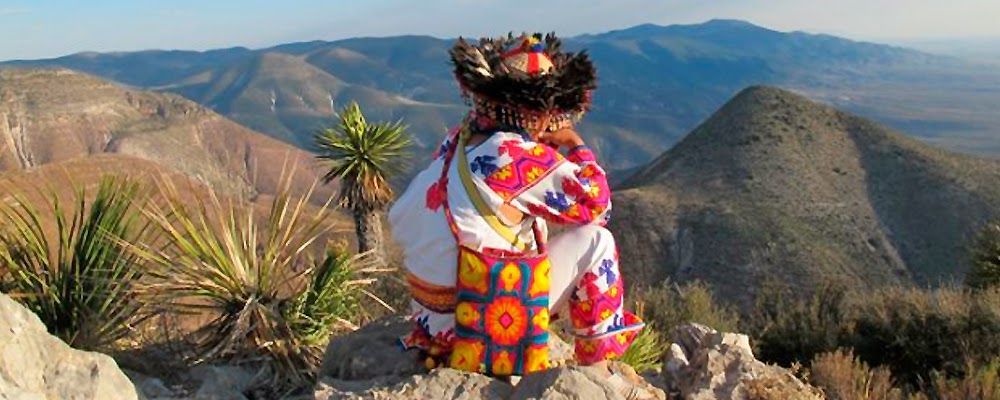
Handicrafts are made by the Huicholes and Coras, who live in the Sierra Madre Occidental. Beautiful figures representing the gods of the sun, rain and others are common in the region. These ethnic groups are distinguished by their colorful costumes, embroidered fabrics, feathered hats, as well as bracelets, rings and glass bead necklaces that express their beliefs. In colorful and dramatic images, the Huichols of the Sierra Madre Mountains reflect their spiritual reality. It was not until sometime after 1950 that many of the artworks began to filter into Mexican and foreign communities.
The study of the Huichol tourist circuit and the marketing channels of Wixáritari crafts and art shows that these are elaborated from a large number of statements. Many actors, apart from Huichol artists, drastically affect the evolution of Wixáritari crafts and art, for example, collectors, craft promoters or travel agencies. Huichol artists do not see the heterogeneity of their pieces as something negative, they feel that it allows them to explore new ideas and materials.
They successfully adapt to the demands of the tourist environment and do not consider adaptation to tourism as a factor of cultural loss; on the contrary, they see it as a means to value craftsmanship and art. If it were not for the commercialization of crafts, the pieces that today are sold as pieces of art would not exist: they were developed with and for tourism. However, Wixárika art is a true reflection of the Huichol people on how they want to be seen and talked about. The tourist context is a circumstance in which they reflect on their own culture and give light to processes of reappropriation, cultural resignification and instrumentalization of culture as a marker of identity and distinction. Many Huichol urban artists have shown that they are capable of using the tourist environment to make themselves visible, apply economic strategies and insert themselves into the political scenario.
The evolution of Huichol art, in adaptation to the tastes of customers with the growth of the tourism industry since the end of the last century, in particular ethnic tourism, developed the interest of tourists in indigenous cultures and their handicrafts and artistic productions. The sale of local products has risen sharply during this period.
Over time, more members of the Huichol communities, one of the few ethnic groups that have retained their original customs and traditions, began to migrate to cities such as Tepic, Guadalajara, Mexico City, and locally to Puerto Vallarta. Like beadwork, it has become synonymous with the movement to protect the rights of ethnic groups while simultaneously providing them with commercial and educational opportunities. If you are looking for this beautiful handicraft, we recommend you to visit the online store www.artesaniahuichol.com
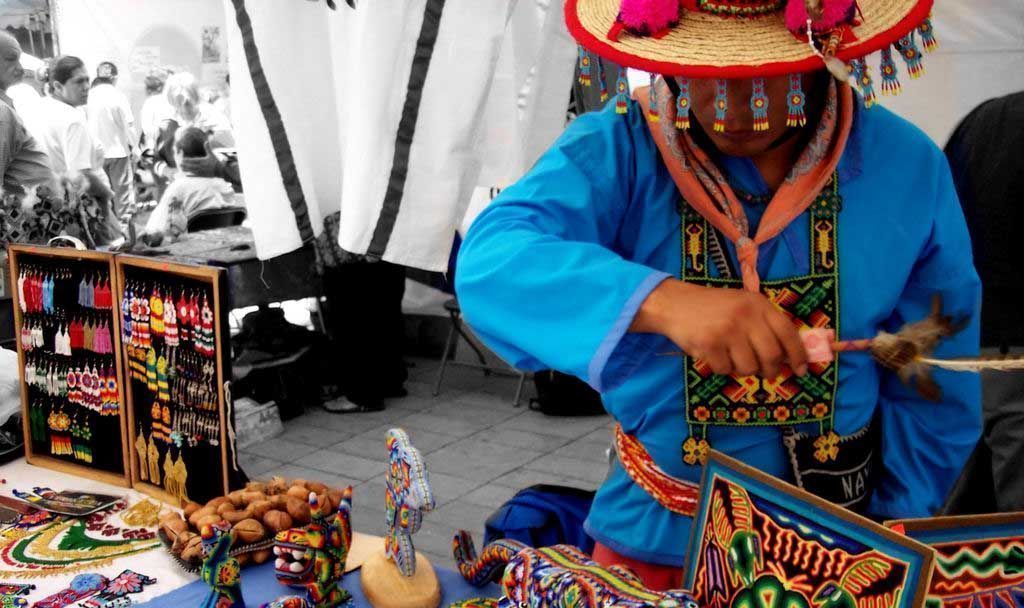
Don't miss the opportunity to have a beautiful Huichol handicraft at home as decoration. For the guardians of peyote, the nierika also symbolizes important elements of nature. It becomes, in its most technical sense, a weave of loops that seeks to reach the blue deer. Thanks to their oval structures, these mystical instruments symbolize certain aspects of an ancestor and their corresponding prayers. The nierikate are modern indigenous art sighs today. Their elaboration no longer depends only on the mara'kames but now passes into the hands of various Huichol artisans who seek the preservation of their traditions.
The production of this delicate handicraft has transcended generations and has become the most representative symbol of the ethnic group that will never die"?
The Nierikate (plural of Nierika) are one of the few living expressions of modern indigenous art in the world, as the Huichol are one of the few indigenous groups in Mexico that have managed to preserve their traditions, but at the same time seek new artistic forms to perpetuate their vision of the world.
A nierika is the link between the past and the present, a lure that invites the traveler to join the wisdom of the universe.
If you are looking for this beautiful handicraft, we recommend you to visit the online store www.artesaniahuichol.com

